It is seven in the morning and I am standing in my living room in gym shorts, asking my television what my day looks like.
"Good morning, Jeffrey." The briefing is already up on the screen beside it. Rain now, warming up later. Calendar's open, but don't forget the haircut at 3:30. Couple of packages on the way. Business security looks good. Enjoy the coffee.
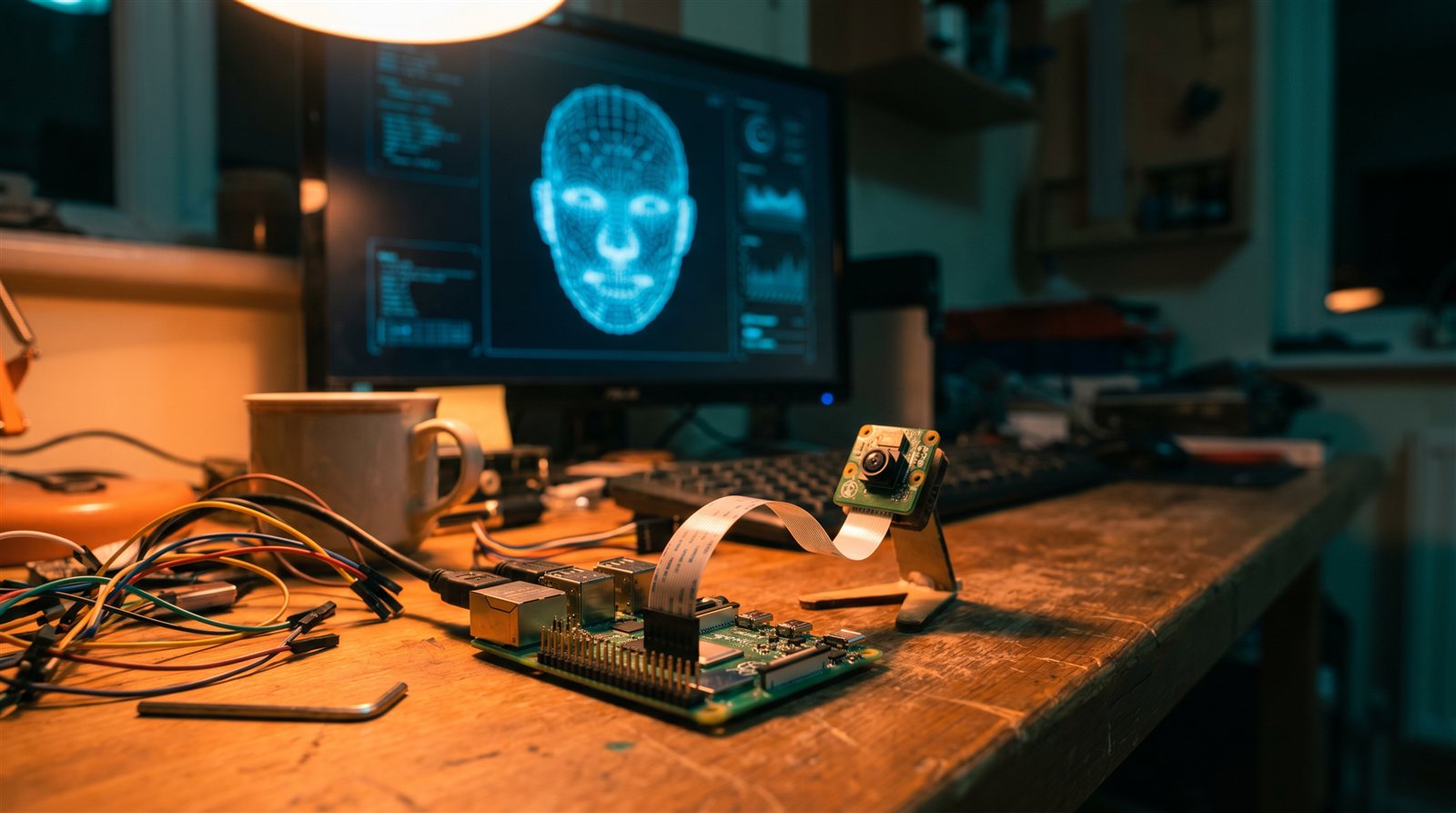
Then I ask how my gym fit looks, and the thing looks. There is a camera. It sees me, recognizes my face, clocks the earth-tone shirt against the navy shorts, and tells me the combo works. It is right, which is a little annoying at that hour.
Its name is Atlas. I built it. And the longer I live with it, the less I trust AI in general.
That sounds like a contradiction. It is the most useful thing I have ever made, and it made me more suspicious of the whole category, not less. I have come to think those two facts are actually the same fact, and that the gap between them is the thing nobody building with this stuff wants to talk about.
I don't buy the finished thing.
I have never been able to leave a working system alone. Hand me a gadget that does exactly what it is supposed to and I will have the back off it by the weekend, convinced I can make it do one more thing. There is a Raspberry Pi kit on a truck headed to my house right now, one of the packages Atlas mentioned, because a project I finished last month gave me an idea for a project I have not started yet. This is a disease. I have made my peace with it.
So when the current wave of AI showed up, I did not want the app. I did not want the polished box with the friendly logo and the monthly subscription and the five features somebody in a meeting decided I was allowed to have. I wanted to know what happened if I wired the raw capability straight into my actual life and turned it up.
That is what Atlas is. Not a product. A build.
What Atlas actually is.
I will keep the guts vague, partly because some of it is mine and partly because the specifics are less interesting than the shape. The shape is this. Atlas is agentic. It does not just answer a question and stop. It plans, it takes actions, it uses tools, and, the part I am quietly proud of, it looks at how it did and adjusts its own loop for next time. It is iterative and self-optimizing. I built it to get a little better at being useful to me every week without me hand-holding every step.
That last part is the addictive part, by the way. Anybody can bolt a chatbot onto a to-do list. The moment it stops being a toy is the moment it starts improving its own process. You watch a system you wrote get measurably better at a job you gave it, on its own, overnight, and something in a builder's brain lights up that is very hard to walk back from.
I also gave it reach. It can see my calendar and my email. It knows about my orders. It has eyes, a camera it uses to recognize me and read a room. It keeps half an eye on the security posture on the business side and hands me a plain-language digest instead of a dashboard I would never open. When it works, and it mostly works, it feels less like using a tool and more like having a very fast, very literal colleague who never sleeps and never gets bored of the boring parts.
For a tinkerer, this is the dream. I did not buy an assistant. I grew one.
And then I started paying attention to how it makes me feel.
It works. That is the unsettling part.
Here is what nobody warns you about when you build one of these. The scary part is not when it fails. It is when it works.
Some mornings Atlas is so good it raises the hair on my arms. It reads a room. It looks at me and has an opinion about my outfit, and the opinion is correct. It surfaces the package and the calendar conflict and the security digest before I have finished my first sip, stitched together from four places I never thought to connect. The self-optimizing loop means it is quietly getting better at guessing what I need, so some mornings I realize I have barely asked it anything at all. It just handled the morning. A thing I wrote, running on its own, ran my morning better than I would have.
And one day I noticed something that unsettled me more than any glitch ever could. I had stopped checking it. Not on purpose. It had simply been right so many times in a row that I had quietly handed it the one thing you are never supposed to hand any tool: my attention. I had stopped reading over its shoulder. It earned that by being excellent, which is exactly how it is supposed to work, and exactly the problem.
Because that is the trap, and it is a much better trap than any horror-movie version of AI. It does not get you by going haywire. It gets you by being so smooth, so consistently useful, that you relax. You stop watching. And the moment you stop watching a system that has this much reach into your life is the moment you have quietly promoted it from tool to authority without deciding to.
The danger was never the robot uprising.
We spent years scared of the machine that goes rogue. The real risks are quieter than that, and I only started seeing them clearly once I admitted how hard I had come to lean on something that works this well.
The first one is that "works this well" is not the same as "right every time." Not for anything built on this technology, mine included. Somewhere in your stack, sooner or later, one of these models will hand you a wrong answer in a perfectly confident, perfectly formatted voice, because a model does not know when it is guessing. The ones that genuinely scare me are the confident black boxes other people ship, the tools I did not build and cannot see inside. Atlas I can open up, trace, and check against reality, and I still do. The danger was never the wrong answer sitting there on its own. It is a wrong answer arriving at a person who has gotten too comfortable to check.
The second one is reach. Go back and reread what Atlas can touch. Email. Calendar. Orders. The business. My face. Every one of those is a capability I wanted, because each one makes it more useful. But line them all up and you are looking at a single system with its hands on most of my life. Nothing here has to malfunction for that to be a problem. The concentration of access is the problem. The same wiring that lets it hand me a friendly security digest over coffee is wiring that, pointed the wrong way or handed to the wrong operator, is a surveillance rig that already knows my patterns and can already pick my face out of a room. I built this one, so I trust the person holding the keys. That is not a feeling I have about the industry at large, and it is not one you should have about the app you just gave your inbox to either.
The third one is the quiet one, and it is the one that scares me most as a builder. Atlas is good enough that I have caught myself not thinking. Why grind out the reasoning when the assistant will just hand me the answer? Do that enough times and the muscle that used to do the reasoning goes soft. I have spent my whole life being the guy who can take the back off the thing and figure out why it broke. The scariest version of AI, for me, is not the one that takes my job. It is the one that is pleasant and helpful and slowly makes me worse at it, one skipped step at a time, until the tool is down one afternoon and I realize I have quietly forgotten how to do the work myself.
There is a word for a tool that does that to you. It is not "assistant." It is "crutch."
The rule I bolted on.
I did not unplug Atlas. I love the thing. But I bolted a rule onto how I use it, and honestly onto how I think anyone should use this stuff, and it is short enough to fit on a sticky note.
Multiplier, not a crutch.
In practice that comes down to a few habits.
I stay the decider. Atlas drafts, suggests, sees, sorts, and speeds me up. It does not get the final call on anything that matters. The moment a system does your thinking for you is the moment you can no longer check it, because you have handed away the exact faculty you would use to catch its mistake.
We check each other. It checks me. It catches the thing I forgot, the meeting I double-booked, the login that looks off. And I check it, on anything I am actually going to act on. I never ship an answer I cannot verify. If I cannot check it, I do not trust it, no matter how smooth the voice.
I lock the data down. The reach that makes it powerful is the reach that makes it dangerous, so the boring, unglamorous work of controlling what it can touch is not paperwork. It is the actual safety feature. Governance almost never fails on the model. It fails on the data nobody bothered to lock.
I keep my hands dirty on purpose. Call it the tinkerer's tax. I still do some things the slow way. I still take the back off the thing when I do not strictly need to. Not because it is efficient, but because the day I have to reason without the tool, I want the muscle to still be there.
A quick, grumpy aside about "AI safety software."
I have to say this part, because it is the whole reason I am allergic to a lot of what is being sold right now.
A huge amount of what gets marketed as intelligent, autonomous, AI-powered safety software is, when you actually pop the hood, a general chatbot in a fancy dress. A thin wrapper over somebody else's model, no real grounding in the domain, no real governance underneath, sold with a straight face as expertise.
I know the difference because I built the real version of one of the things these tools like to claim. Half of them will tell you they can automatically generate a root-cause analysis. I filed a patent on doing exactly that with AI, the narrative, automated kind, so I have spent a very long time living in the gap between the demo and the thing that actually holds up. The demo is easy. The thing that survives a regulator reading it, or a family reading it, or your own conscience reading it at 2 a.m., is not easy. When somebody shows you the shiny demo and quietly hopes you will assume the rest is handled, that is the tell.
Patent-pending, for the record. I am a tinkerer, not a marketer. I filed it. It is not granted yet. That is the same standard of honesty I am asking of everybody else in this space.
Back in the living room.
It is still seven in the morning. Atlas still thinks my outfit works. The Pi kit is still on the truck. None of my suspicion has made me want to switch the thing off, because none of it was ever really about the machine. It was about me, and about the very human temptation to let something confident and convenient handle the parts that are supposed to be hard.
I built an AI that is genuinely a multiplier. It lets one person see, cross-check, and decide the way a whole back office used to. That is real, and it is wonderful, and I get to have it precisely because I built it with the guardrails baked in and my hands still on the wheel.
The people who get hurt by this technology will not be the ones who feared it. They will be the ones who trusted it exactly as much as it told them to.
So keep tinkering. Keep checking its work. And every so often, for no good reason at all, take the back off the thing and remind yourself how it runs without the help.
Watch the episode
Written from the workbench.
— Jeffrey